Logistics Guide

How to Pack Plastic Motorcycle Parts for Export: Best Practices for Safe Shipping

EMPP Team··7 min read
#packaging#export#shipping#logistics#quality-control
How to Pack Plastic Motorcycle Parts for Export: Best Practices for Safe Shipping featured image

Why Packaging Matters for Plastic Parts

Plastic motorcycle parts are vulnerable during transit — they can scratch, crack, deform, or get damaged by moisture. Proper packaging is critical for ensuring your shipment arrives in perfect condition, especially for long international routes.

Our Standard Packaging Process

Layer 1: Individual Part Protection

Each part receives:

  • PE foam bag — prevents scratches and dust
  • Edge protectors — foam or cardboard on vulnerable corners
  • Separator sheets — between stacked parts to prevent friction

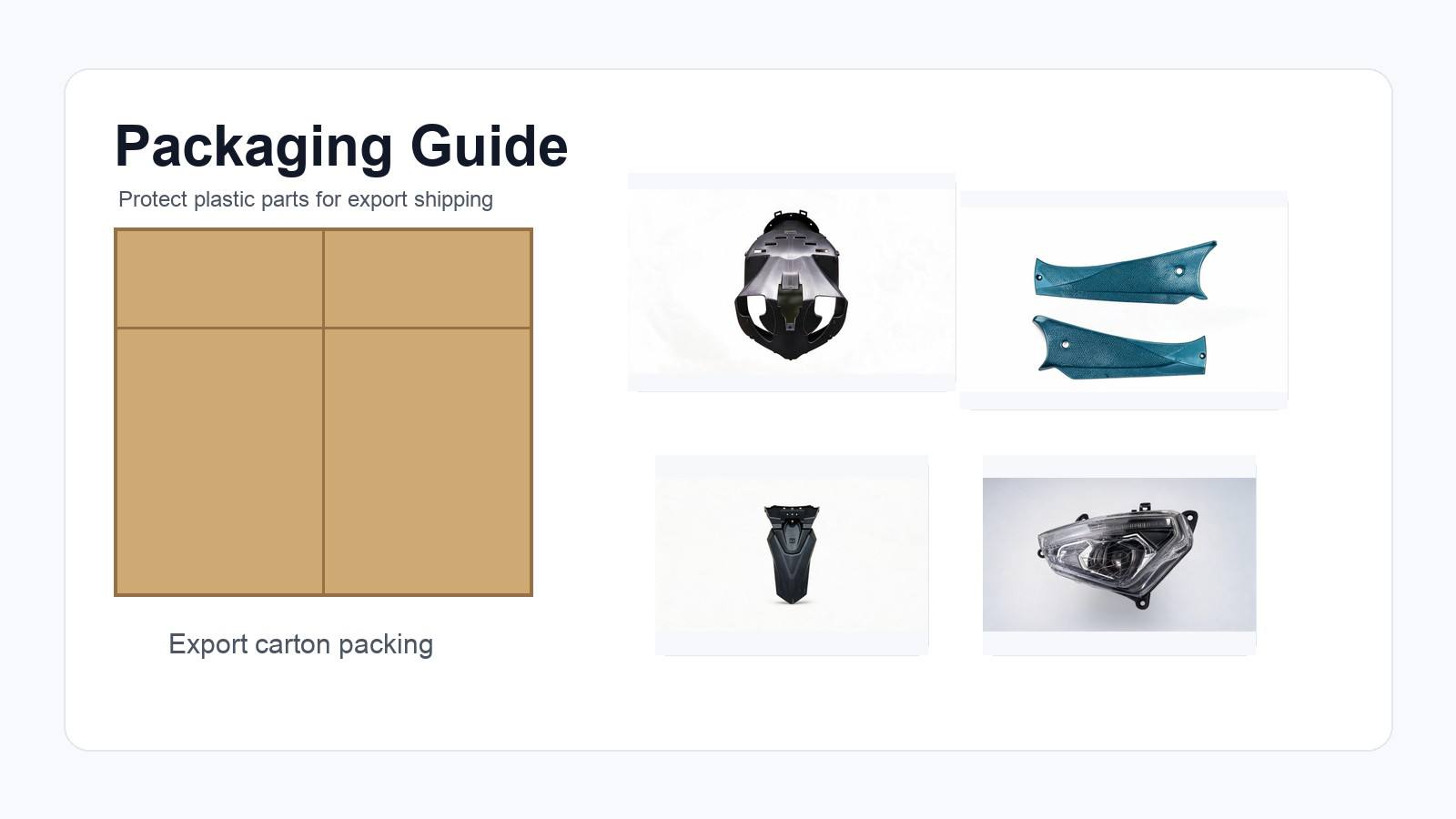
Layer 2: Carton Packing

Parts are packed into export-grade cartons:

  • Double-wall corrugated cartons (5-layer for heavy parts)
  • Internal dividers for multiple parts per carton
  • Void-fill material (foam, air cushions) to prevent movement
  • Maximum weight: 25 kg per carton

Layer 3: Palletization

Cartons are stacked on pallets:

  • Stretch-wrapped for stability
  • Corner boards for stacking strength
  • Moisture barrier for sea freight
  • Strapped securely

Special Considerations by Part Type

Large Body Panels

  • Pack individually or in pairs (face-to-face with protective sheet)
  • Use custom-fit foam corners
  • Larger carton sizes with reinforced edges

Transparent Parts (Headlight Covers)

  • Individual PE film wrapping
  • Extra padding to prevent pressure marks
  • "Fragile" and "This Side Up" labels

Flexible Parts (Fenders)

  • Can be nested to save space
  • Ensure no permanent deformation from stacking
  • Support any unsupported spans

Sea Freight Packaging

For sea freight (30-45 days transit):

  • Moisture-resistant cartons or desiccant packs inside
  • Extra waterproof layer (plastic liner in carton)
  • Pallet wrap with VCI (corrosion inhibitor) for metal clips/inserts

Air Freight Packaging

For air freight:

  • Lighter-weight cartons acceptable
  • Still requires proper internal protection
  • Faster transit = less moisture concern

Common Packaging Mistakes

1. Overloading cartons — leads to carton failure during handling

2. Insufficient internal padding — parts rub against each other

3. No moisture protection for sea freight

4. Poor palletization — cartons shift during transit

5. Not labeling fragile or orientation-sensitive packages

Our Packaging Guarantee

We guarantee proper packaging for all export shipments. In the rare event of transit damage:

1. Document the damage with photos upon receipt

2. Note damage on the delivery receipt

3. Contact us within 48 hours

4. We'll arrange replacement or compensation

Ready to Get Started?

Send your part photo, model or quantity. We will quote within 24 hours.